Compliance
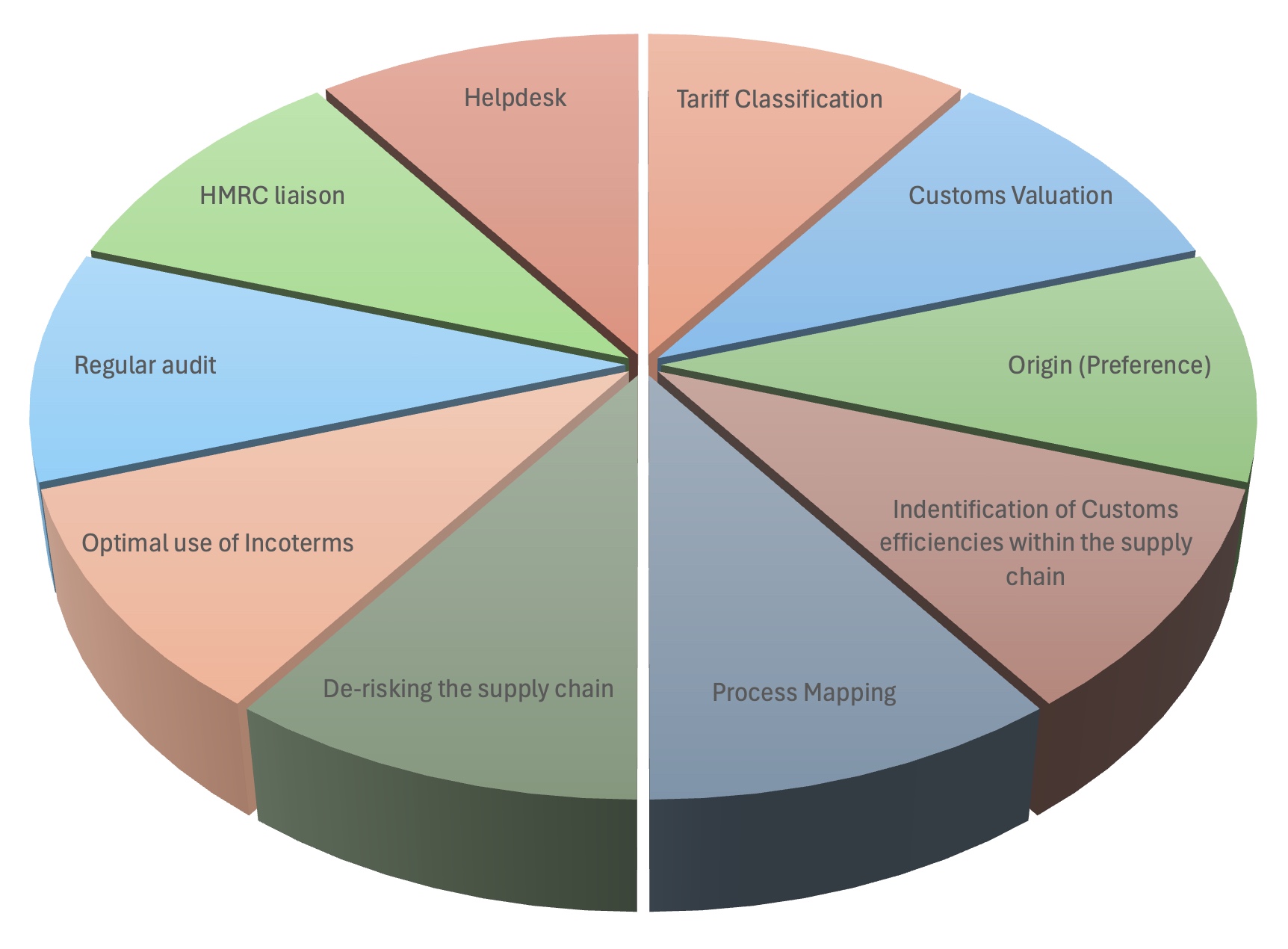
We provide comprehensive customs and trade compliance services designed to optimise import and export operations

Tariff classification
The tariff classification is a key driver when determining duty rates, entitlement to preference (Free Trade Agreements) and other tax treatment (VAT, Anti-Dumping duties, Countervailing duties, Excise duties, etc.). It is therefore imperative that importers seek expert advice when classifying their goods.
Tariff classification can be highly complex, particularly where the tariff does not keep pace with the speed of technological innovation, an item falls into more than one tariff heading, or component parts are required to be classified in their own right.
Customs Valuation
Customs duty is ad-valorem. It is calculated as a percentage of the value of the goods. It follows therefore that if the value can be legitimately reduced, the duty payable is reduced accordingly. There are many ways that a value can be reduced using the available law. Transfer pricing is another area where it is possible to significantly reduce customs values and this has proved particularly helpful to US importers who are navigating high levels of import duty.
Origin
Free Trade Agreements allow for goods to be shipped into other countries or territories at a free or reduced rate of customs duty. Only those goods originating in the country or territory which is a party to the agreement can avail themselves of these preferential rates. The qualifying criteria are defined for each product category, and effective planning can ensure that importers are best placed to take advantage.
Duty Reliefs
Duty reliefs allow importers to import/export goods at a free rate of customs duty where certain conditions are met. Customs Warehousing, Inward Processing, Outward Processing and Returned Goods Relief are all examples of reliefs that importers should consider when analysing their supply chain and seeking to optimise customs duty spend.
Risk reviews
Importers and Exporters should continuously review their supply chain operations. The legislation changes at a significant rate with the introduction of new Regulations (i.e. CBAM) and Geo-Political changes (i.e. BREXIT).
Non-compliance can result in significant financial penalties, the loss or delay of goods and the revocation of authorisations. Most compliance issues can be avoided with good operating procedures and a robust audit program.